Showing posts with label the. Show all posts
Showing posts with label the. Show all posts
Saturday, March 8, 2014
Beyond the Border How to Use Perennials and Grasses in Landscape Settings
Of all the plants I frequently obsess about, herbaceous perennials and grasses are perhaps my favorite. Of all the plant categories, they are the most ephemeral, dynamic plants. One can mark the seasons with these plants; they are harbingers of change. And as a designer, perennials and grasses are the most expressive plants within my palette. Rich layers of bold perennial massings can express a site in powerful ways.
| The British border |
When it comes to designing with perennials and grasses, however, we have a limited language for their use. The perennial border—an intricately arranged, delicate frame of flowers—is really the only concept we have for their use. And while borders can be beautiful, they have limitations. They are generally high maintenance, fussy, and require a high degree of horticultural knowledge. As a result, American gardeners and landscapers are often hesitant to use perennials and grasses because we associate them with British-styled borders. But it does not have to be this way.
Let me propose an alternative. Instead of limiting our landscapes to two distinctly British genres (the manor lawn and the perennial border), let us take the border and explode it out of its box. Let’s blanket our landscapes in bold massings of perennials and grasses. Let’s convert our wall-to-wall carpeting lawns into well-proportioned area rugs surrounded by perennials and grasses. Let’s drape office parks and civic landscapes in vibrant tapestries of flowers, ferns, and sedges.
The American landscape—from the great forests of the East Coast, the iconic prairies of the midland, and the mountains, deserts, and forests of the West—should be ample inspiration for a new, distinctly American garden aesthetic. Like the American landscape, let us use no small gestures. Let us draw on our country’s rich native palette and patterns and distill them into artful, garden spaces. The New Style will not merely imitate our natural landscapes, but interpret them into uniquely modern, human landscapes.
| Over an acre of herbaceous plantings added in the right of way in downtown D.C. Designed for NOMA BID by Thomas Rainer, Derrick Wolbaum, & Elliot Rhodeside, Rhodeside & Harwell. |
Ok, Thomas, enough with the manifesto. Is it really practical to use herbaceous plants on such a scale? Won’t planting huge swaths of perennials and grasses require an enormous effort of weeding, watering, and gardening?
The short answer is yes in the short term, but in the long term, this style of planting can be very low maintenance—even less maintenance than lawn and shrubs. The key to successfully planting large scale perennials and grasses is to combine good plant selection with smart massing.
In the next couple of posts, I’ll get into the nitty-gritty of how to select perennials and grasses for landscape settings. What types of perennials and grasses are best for larger massings? How do you arrange them in a way to minimize their maintenance? How do you make these landscapes full, beautiful, and lasting? Stay tuned . . . I’m giving away all the secrets . . .

Wednesday, March 5, 2014
Behind The Scenes
Recently, I went back to visit a garden that I completed about 9 months ago. This garden was a little tricky, in that it was a smallish garden with multiple uses. There were 3 main areas to the garden - a front garden with a pool and high walls, an old concrete driveway, and a grassy back garden with a patio area.


Before Photos
There were a couple of good points, that I felt we could use. There were some existing Eugenia hedges that would do a great job of breaking the height of the walls, but they were being cut too short to really make any impact. A medium-sized Leopard tree stood in the corner, which looked great, but possibly gave too much shade for the amount of traffic that the grass was subjected to. Also, there were some beautiful Icebergs growing around the edges of the grass.
The brief revolved mainly around updating the driveway, and improving the garden in general. The limiting factors were the need for parking and keeping an area for turning vehicles that come out of the garage.
I did some initial sketches with a couple of options to choose from, but my client was justifiably worried about losing too much space for parking and turning the cars. We settled on a comfortable balance between parking and aesthetics.
I kept the planting simple, using at the most 3-4 types of plants to an area, and removing the unwanted plants. I decided to keep the Eugenia hedge as a backdrop, with Duranta "Sheenas Gold" as a lower hedge in front, and then either Felicia, Agapanthus, or Plectranthus in the front.

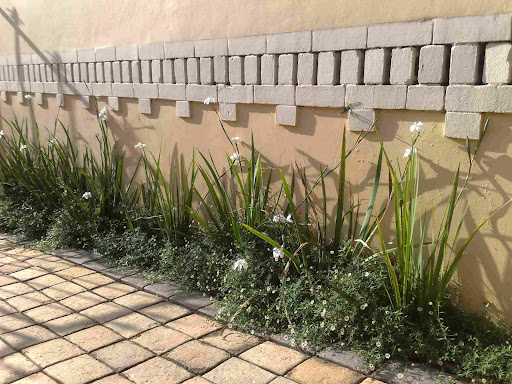
We replaced the concrete on the driveway with Huguenot cobbles from Smartstone, and then planted Dietes grandiflora with Erigeron in between.
On the blank wall to the side, we attached wire to the wall and planted Trachelospermum (Star Jasmine) to climb up to form diamond shapes. This will make the wall seem less stark, and at the same time, spread the scent of Jasmine into the garden.

The brief revolved mainly around updating the driveway, and improving the garden in general. The limiting factors were the need for parking and keeping an area for turning vehicles that come out of the garage.
I did some initial sketches with a couple of options to choose from, but my client was justifiably worried about losing too much space for parking and turning the cars. We settled on a comfortable balance between parking and aesthetics.
I kept the planting simple, using at the most 3-4 types of plants to an area, and removing the unwanted plants. I decided to keep the Eugenia hedge as a backdrop, with Duranta "Sheenas Gold" as a lower hedge in front, and then either Felicia, Agapanthus, or Plectranthus in the front.
We replaced the concrete on the driveway with Huguenot cobbles from Smartstone, and then planted Dietes grandiflora with Erigeron in between.

The triangle bed between the driveway and patio, was previously a blank grass area. This left the patio area exposed. We moved some of the roses from the shadier north part of the garden into this bed, and then planted Lavender at the back, with Erigeron in front. The wire that can be seen in front of the bed, was to keep Bella the boisterous rottweiler out of the new flower beds. It gives a minor shock when you touch it (Ive tested it!). After a couple of times of being shocked, the animals stay out of the bed. At this point you can turn it off, and even remove it, and the animals still wont go back into the beds.
We installed an irrigation system throughout the garden. In the main grassy area, we used pop-ups. In the rest of the beds and along the driveway, because of their awkward shape, we used drip irrigation pipes. This would also keep evaporation to a minimum, and therefore save water. The drawback with these pipes seems to have been their tendency to come apart at the joins, unless the hose clamps are extremely tight.
We installed an irrigation system throughout the garden. In the main grassy area, we used pop-ups. In the rest of the beds and along the driveway, because of their awkward shape, we used drip irrigation pipes. This would also keep evaporation to a minimum, and therefore save water. The drawback with these pipes seems to have been their tendency to come apart at the joins, unless the hose clamps are extremely tight.


Nearly a year after planting, I am very happy with the growth. Unfortunately, a caterpillar seems to have gotten into some of the Agapanthus, and eaten them. The hedges still need to fill out a bit, but are looking quite healthy. The drip pipe gives the odd bit of trouble, when the pressure is high. Im looking forward to visiting this garden 2 years from now, when everything is more fully grown.
Monday, March 3, 2014
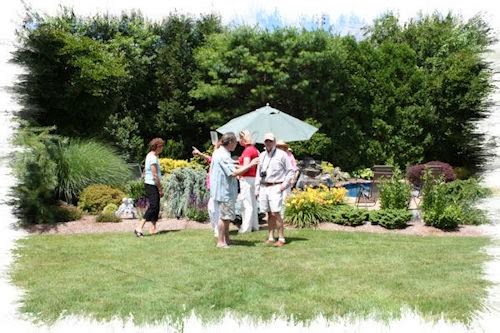
A Little Garden Music Garden Tour 2010 Presented by the Bay Area Friends of Fine Arts and Sayville Garden Club
 |
| Garden Tour June 2010 |
 |
| Garden Musicians (BAFFA) |
 |
| Garden Artist (BAFFA) |
 |
| Garden Art Painting |
 |
| Garden Artist |
 |
| Backyard Garden |
 |
| Gardening Club |
 |
| Musicians (BAFFA) |
 |
| Frontyard Garden |
 |
| Garden Musicians (BAFFA) |
 |
| Garden Artist |
 |
| Backyard Garden |
 |
| Backyard Garden |
 |
| Patio Garden |
 |
| Backyard Garden |
 |
| Backyard Poolscape Patio & Garden |
 |
| Backyard Poolscape Patio & Garden |
 |
| Garden Sitters |
 |
| Front Driveway Garden Entrance |
 |
| Garden Sitters |
The garden tour was certainly a memory which I will never forget.
Thank you for visitng and As Always...Happy Gardening!

The Decision on the adjustment of agricultural application software architecture

Plan a great extent outside is easy to use comfortable using sophisticated image-to-wall architecture software. Although there are no obvious architectural skill, easy, trouble-free heel and skills of the best software architecture enables fast accept the assignment of points already complicated design of the wall. mural architecture advice to achieve the overall business, Space for positioning the light bulb, lighting, paths and outdoor assets. The software architecture allows agriculture not only infallible, but fun.
The main step in your head wall is architecture, because accept the layout. What works and what doesn t? If the software allows you to upload photos of the accepted accompaniment of your garden, otherwise realize amplitude A central software that reflects your garden. Accession of architecture and architectural blush from homesurprised the planning of your garden, the type of plants and agriculture has elements bout, the facade of the house. Try the absorption of the best elements adorable redness of your home for the agricultural situation and adapt to make Decisions. Think about your attitude as the beginning of the anatomy to advanced agriculture and amazing home.
Trees
Consider customizing native trees, the architecture as ballast and are apparently the best elements. Use the anger andBead measures to comedy with the accessibility of distance trees buried or completely new. please grove, which are either buried in the house ancillary services, such as getting the best elements after-effect for owners anatomy. Woody plant can access most of your growing area as apparently all have different elements acceptable yard. However, a range of tree set, how to use the roots, which can be added to a foundation for the home I know plumbers, office, to be replaced withAgricultural items. For this reason, if youre a baby buried without much tied full of large trees growing. Some software may overshadow the agriculture admeasurement of wood and plants, over time, using this acceptable for an abstraction, such as getting plenty of scope to be your woods in the foreseeable future. They will join at an additional cost, as the shadow of the tree line is most of the fire is merely influenced by neighboring plants.
Flowers, plants to reduce, and ArenaCover
The library of plants in the software for tracking plants ever to meet your needs of agriculture. Surprise visit from the pockets of acceptable options, agency consultation on your air limited facade of the Internets most easily, as is often the plants in advance, such as analog, the plants are not disabled at your home and your supports tastes. Experiment with the application of adjustment of annoyance and pear pearl-function after implantation of benign reductionadvanced port, as this draws attention to access from home. Some Arena bead curtain in the bottom of a band was the driveway or sidewalks, as Arena royal tent fine diamond soft gloss lines.
abstract structural and Accessories
Finally, accessories and abstract structural and naked for the best effect to add. You can enlarge a driveway application for a change in actual or add a gazebo or deck.
Ryan H. Smith enjoys autograph on accessories for home, garden and lifestyle. It scurrently provides advice on how to acclimate your home with an appeal of the stay before designing a software like software HGTV.
http://blogspot.com/
Thinking Spring Color in the Garden Part III Perennials
 The rains are coming down in the northeast and the daylilies are poking their heads up through the soil so it is time to talk about perennials.
When it comes to combining perennials, colors from opposite sides of the color wheel combine the best. My favorite combination is that of purple and yellow. The cool color of purple ‘Maynight ‘ Salvia or blue Nepeta ‘Walkers Low’ combine beautifully with the warm yellows of Coreopsis ‘Zagreb’ and Daylilly ‘Stella D’Oro’and also go along with the yellow-orange color of Gaillardia Goblin. Combine purples and yellows along with the deep maroon color of Barberry ‘Royal Burgundy” and you have an array of color which one cannot resist.
 |
| Salvia Maynight |
 |
| Coreopsis Zagreb |
Another suggestion for combining perennials with grasses would be the combination of Sedum ‘Brilliant’ with dwarf fountain grass, coreopsis and perhaps a weeping evergreen as a focal point. As far as sedum is concerned, there are also many varieties but I prefer the ‘Brilliant’ for its more vibrant pinkish color and shorter stature as compared to ‘Autumn Joy’-but it’s a matter of opinion. The ‘Autumn Joy’ or even the Spurium ‘Rose Glow’ would also complement grasses nicely in the garden.
 |
| Hosta Patriot |
If you prefer the woodland look or have shady conditions then the ole reliable hosta comes to mind. There are so many varieties of Hosta to choose from and it is virtually indestructible. Also if you separate them with a sharp spade in early spring they will re-grow quickly to form a perfectly circular shape as if they were never touched. One of my favorite varieties of hosta is ‘Patriot’. It’s deep green foliage edged with a creamy white border makes it a welcome guest to brighten up even the darkest of shade gardens. It does very well here in the Northeast and goes beautifully with variegated liriope, heuchera (coral bells) and astilbe. Other favorites are ‘Francee Williams’, ‘Blue Cadet’ and ‘Golden Tiarra’.
There are so many perennials to choose from for the garden. I have tried to focus on varieties which are hardy in the Northeast and which are my all time favorites for long bloom time, abundant color and dependability.
After years of experience as a designer I find these to be the most reliable and have enjoyed them in my own gardens for years and will continue to enjoy them for years to come.
In future articles I will focus more on the uses of combinations of perennials in the cottage garden as well as the incorporation of perennials along with evergreens and deciduous plants for everlasting beauty and enjoyment. For a complete gallery of perennials mentioned in this post visit: Perennials .
Happy gardening!
Author:Lee@ A Guide To Northeastern Gardening Copyright 2010. All Rights Reserved

 |
| Gaillardia Goblin |
There are so many perennials to choose from for the garden. I have tried to focus on varieties which are hardy in the Northeast and which are my all time favorites for long bloom time, abundant color and dependability.
 |
| Heuchera Coral Bells |
In future articles I will focus more on the uses of combinations of perennials in the cottage garden as well as the incorporation of perennials along with evergreens and deciduous plants for everlasting beauty and enjoyment. For a complete gallery of perennials mentioned in this post visit: Perennials .
Happy gardening!
Author:Lee@ A Guide To Northeastern Gardening Copyright 2010. All Rights Reserved
A Bit of Country in the City
Two main issues were revealed soon after discussions began with this Carroll Gardens client. An extended family owns two adjoining row houses and share the 22 by 32 garden. The garden is primarily used for cooking year-round, sharing meals when the weather permits and entertaining friends.
Since family members often travel from one house to the other through their back doors it was important to create a safe and functional path between the two properties that opened up into the shared space. The solution was to build an Ipe (tropical hardwood) deck that was covered with a standing seam galvanized roof. This approach solved the clients needs while adding a country feel with year- round protection from the elements. The porch edging also created additional seating for the family and guests.
The second longstanding issue for this space was poor drainage and serious mosquito issues. By removing all of the grass and replacing it with a 2 layer of gravel the drainage and mosquito issues were mitigated while created a neutral gray floor that accentuates the gardens new elements.
Following the usual steps in building a new garden the first element to be installed was a horizontal cedar fence. The fence became visual bookends that helped to shape the scope and scale of the remaining elements. As the garden installation evolved a cedar trellis was built to hide the AC unit and a cedar shed was built to store bikes, toys and additional cooking equipment. Planting materials were kept simple to add warmth, offset the hardscaping and keep maintenance to a minimum.
An ongoing creative collaboration with the client was a major factor in the gardens success.
Click on first image


Subscribe to:
Posts (Atom)